
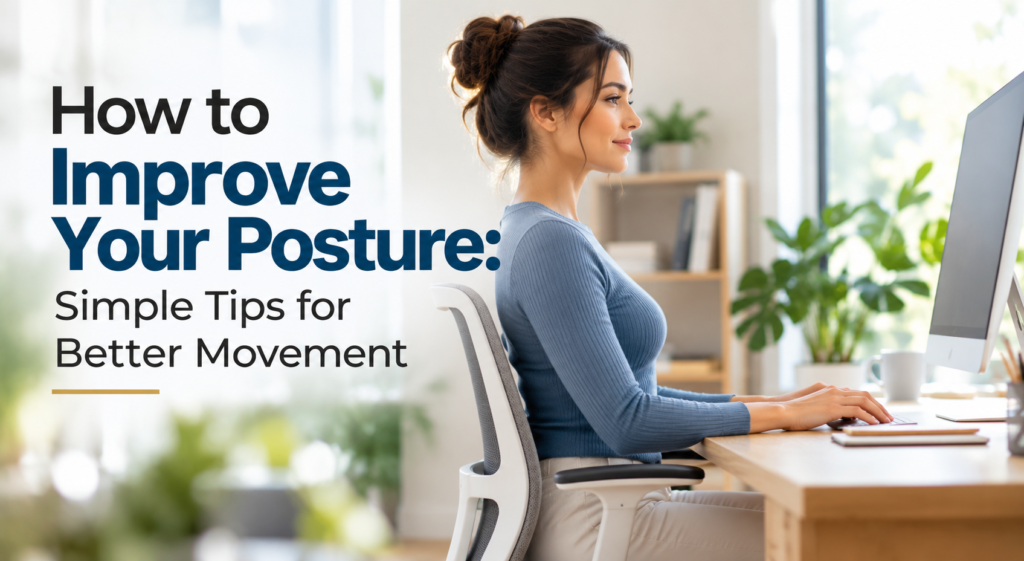
Posture is something we use throughout the day without thinking about it. Whether you are sitting at a desk, driving, standing in the kitchen or looking at your phone, your body is constantly adapting to the position you are in.
Good posture does not mean holding your body perfectly still all day. Healthy movement includes changing positions, moving regularly and having enough strength and mobility for everyday activities.
At Holdom Chiropractic & Wellness Centre, Dr. Ron Uppal can assess movement and provide personalized recommendations based on your individual needs.
1. Avoid Staying in One Position for Too Long
One of the simplest ways to support healthier posture is to move regularly. Even a comfortable sitting position can become uncomfortable when you remain there for hours.
Simple strategies can include:
- Standing up regularly
- Taking short walking breaks
- Changing your sitting position
- Alternating between tasks
- Adding movement into your workday
2. Set Up Your Workstation
A workstation that encourages you to repeatedly reach forward, look down or twist can make long work sessions more uncomfortable. Your chair, desk, monitor and keyboard should allow comfortable work without constantly holding your neck or back in an awkward position.
Check your setup:
- Keep your monitor at a comfortable viewing height
- Keep frequently used items within easy reach
- Position your keyboard and mouse comfortably
- Use a chair that provides appropriate support
3. Pay Attention to Phone and Screen Habits
Phones and handheld devices can encourage long periods of looking downward. Aim to vary your position, take regular breaks and bring your device closer to a comfortable viewing height.
4. Build Strength and Mobility
Posture is influenced by more than how you sit. Strength, mobility, coordination and daily movement all play a role. Appropriate strengthening and mobility exercises can support comfortable everyday activity.
5. Be Mindful of Driving and Sleeping Positions
Driving can involve sitting in the same position for extended periods. Adjusting your seat and taking appropriate breaks during longer journeys can help you avoid unnecessary discomfort.
Your sleeping position can also affect how your neck and back feel when you wake up.
6. When Should You Get Your Posture Assessed?
If you regularly experience neck or back discomfort, headaches, stiffness or movement limitations, it may be useful to look beyond posture alone. An assessment can help determine whether symptoms may be related to movement, muscle tension, joint mobility or another issue.
Consider an assessment if:
- Pain keeps returning
- Stiffness affects daily movement
- Work or sitting aggravates symptoms
- You have difficulty maintaining comfortable movement
- Symptoms began after an injury
How Chiropractic Care May Help
Depending on your assessment and individual needs, chiropractic care may include:
- Movement assessment
- Chiropractic care when appropriate
- Mobility work
- Exercise guidance
- Posture education
- Practical activity recommendations
Take the Next Step Toward Better Health
If pain, stiffness or an injury is affecting your everyday movement, getting an appropriate assessment can help you understand your options.
At Holdom Chiropractic & Wellness Centre, Dr. Ron Uppal provides personalized chiropractic care for patients in Burnaby.
Holdom Chiropractic & Wellness Centre
111-2251 Holdom Avenue
Burnaby, BC V5B 0A2
604-298-1777
Frequently Asked Questions
Good posture is not one rigid position. It involves comfortable alignment, appropriate muscle activity and the ability to change positions and move regularly.
Spending long periods in one position or repeatedly working in uncomfortable positions can contribute to discomfort for some people.
There is no single schedule for everyone. The important goal is to avoid remaining in one position for prolonged periods and include regular movement.
Appropriate strengthening and mobility exercises can support movement and physical capacity.
If posture-related discomfort affects daily activities, an assessment can help determine whether chiropractic care or another approach may be appropriate.